Winter in Boulder brings stunning snow-capped mountains, but it also carries the significant risk of frozen and burst pipes. A single burst pipe can release gallons of water per minute, leading to catastrophic flooding, structural damage, and costly repairs.
For homeowners and property managers along the Front Range, understanding how to prevent this disaster is not just a matter of maintenance—it’s essential for protecting your property and ensuring peace of mind.
This guide provides a comprehensive overview of how to protect your pipes, from long-term solutions to immediate actions you can take during a cold snap. We’ll cover why pipes freeze, which ones are most vulnerable, and what to do if you suspect a problem.
Understanding the Risk in the Boulder Area
The science behind frozen pipes is simple: when water freezes, it expands. This expansion exerts immense pressure on the pipe from within. It’s not actually the ice that causes the rupture, but the intense water pressure that builds up between the ice blockage and a closed faucet. When that pressure becomes too much for the pipe to handle, it bursts!
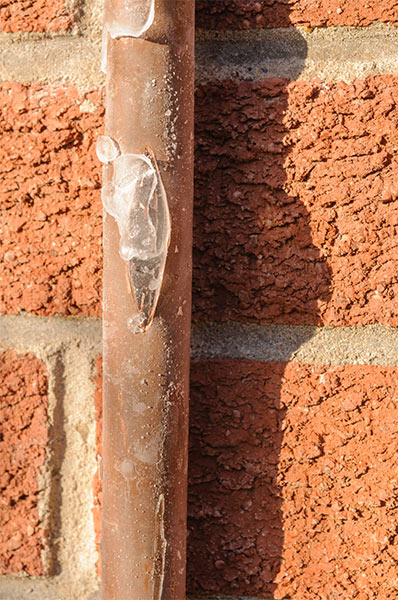
In Boulder, the cold season lasts for approximately 3.5 months, from mid-November to early March with average lows in December dropping to 23°F. Pipes exposed to temperatures below 20°F are at high risk of freezing, making winter preparation critical for every property owner.
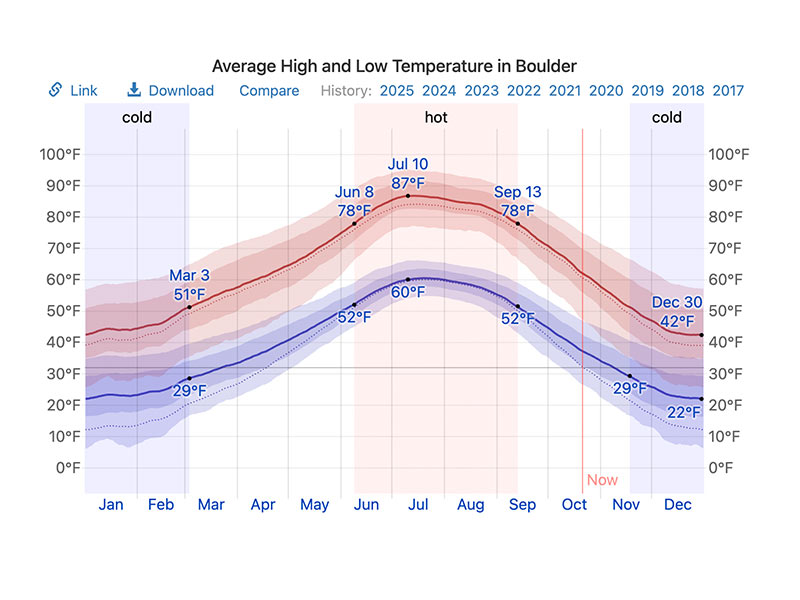
Graph Courtesy of WeatherSpark.com
Pipes at the greatest risk include:
- Pipes in unheated spaces: This includes basements, crawl spaces, attics, and garages.
- Pipes along exterior walls: These pipes have minimal insulation protecting them from the outside cold.
- Outdoor plumbing: Outdoor hose bibs, sprinkler systems, and swimming pool supply lines are extremely vulnerable.
- Pipes in cabinets: Plumbing under kitchen and bathroom sinks is often located against an exterior wall, making it susceptible to freezing.
Knowing when to start worrying is key (but I’m here to deliver you peace of mind). When you see forecasts predicting temperatures dropping below freezing (32°F), and especially into the low 20s, it’s time to take immediate preventive action.
Preventive Measures to Take Before Winter
Getting your property ready for the cold season is the most effective way to prevent frozen pipes. These long-term solutions will provide a strong defense against plunging temperatures.
1. Insulate Vulnerable Pipes
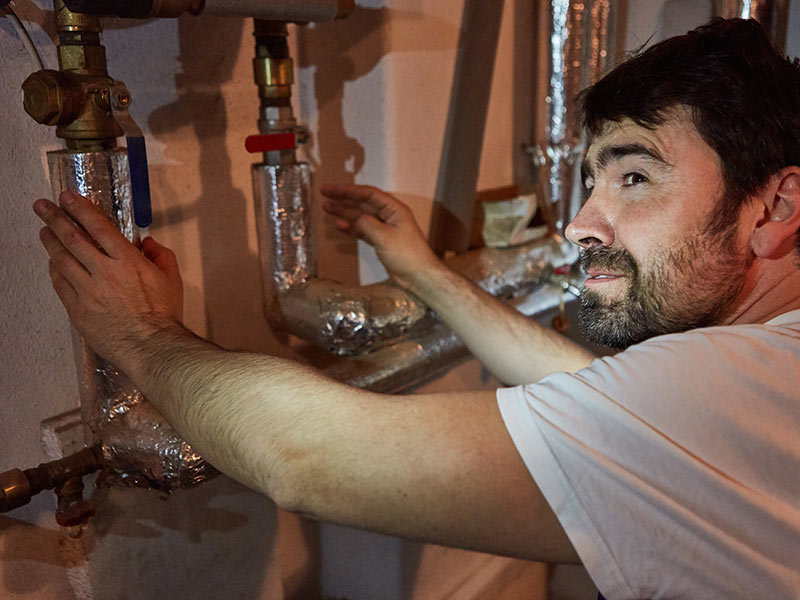
Insulation is your first line of defense. By wrapping pipes in vulnerable areas, you can protect them from the cold.
- Types of Insulation: Common options include foam pipe sleeves, fiberglass pipe wrap, and rubber insulation. Foam sleeves are inexpensive, easy to install, and available at most hardware stores like Home Depot or Lowe’s. Simply cut the sleeve to the correct length, split it open, and fit it over the pipe.
- How to Apply: When insulating, ensure there are no gaps. Use duct tape to secure the insulation, especially around elbows and joints where the pipe changes direction. Pay close attention to pipes in unheated areas like basements, crawl spaces, and attics.
2. Seal Air Leaks
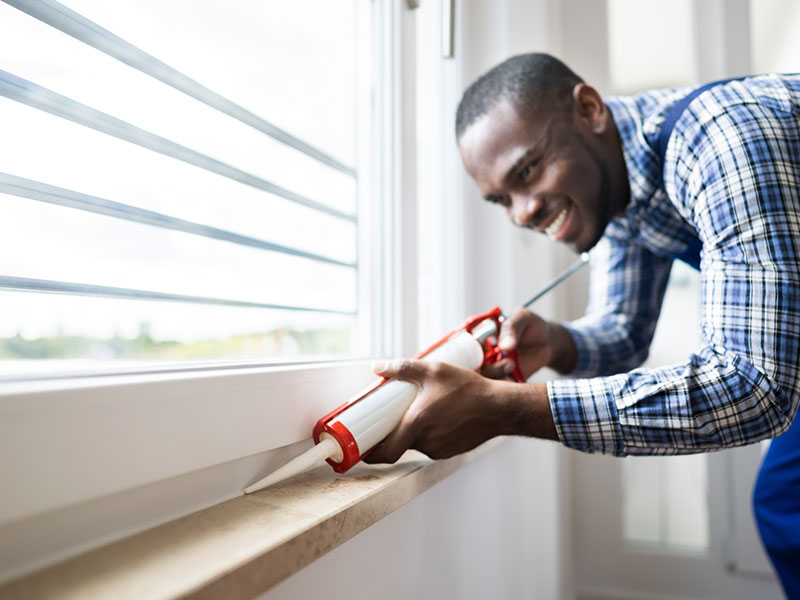
Cold drafts can quickly freeze pipes. Inspect your home for any cracks or openings that allow cold air to enter and seal them promptly (try these 3 methods).
- Where to Look: Check for gaps around windows, exterior doors, and foundation walls. Pay special attention to areas where pipes or utility lines enter your home.
- How to Seal: Use caulk to fill small cracks and weatherstripping to seal gaps around doors and windows. This not only protects your pipes but also improves your home’s energy efficiency.
3. Disconnect and Protect Outdoor Faucets
Outdoor plumbing is highly exposed to the elements and requires special attention before the first freeze.
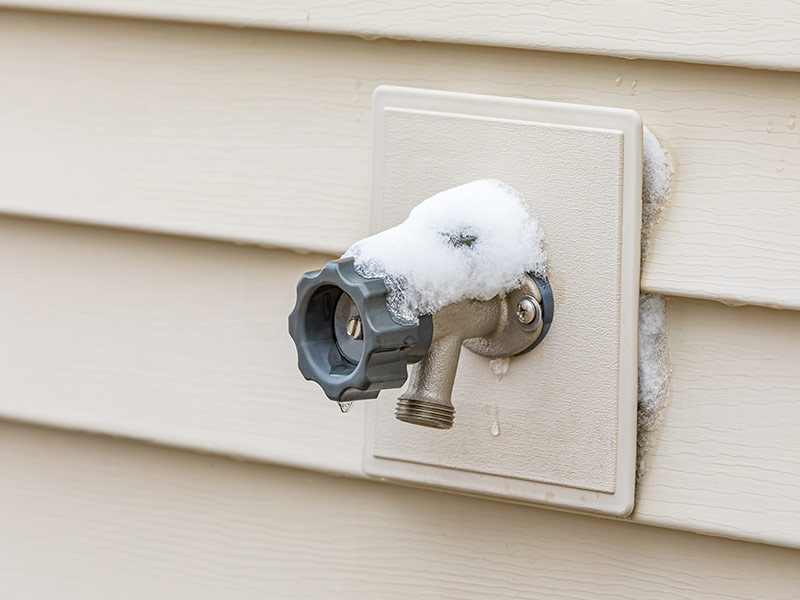
- Disconnect Hoses: Disconnect, drain, and store all garden hoses. Water trapped inside a connected hose can freeze and expand, creating pressure that can rupture the faucet and the connecting indoor pipes.
- Shut Off Outdoor Water Supply: If you have interior shut-off valves for your outdoor faucets, close them. Then, open the outside faucets to drain any remaining water. Go here for a DIY guide.
- Install Faucet Covers: Use insulated faucet socks or covers to protect outdoor spigots from the cold. These are an inexpensive and effective way to add an extra layer of protection.
- Winterize Systems: Ensure sprinkler systems and swimming pools are properly drained and winterized according to the manufacturer’s instructions.
4. Maintain a Consistent Indoor Temperature
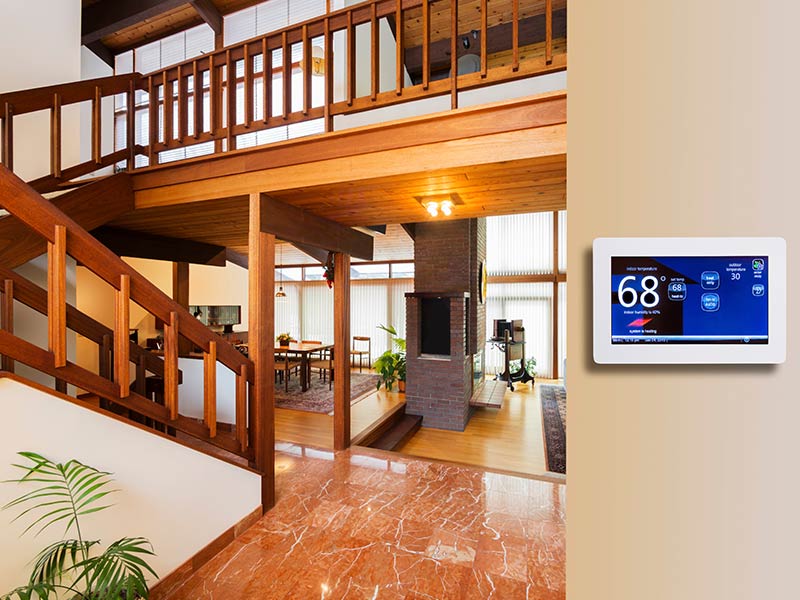
Keeping your home warm is crucial for protecting your plumbing. Never turn your heat completely off during winter, even if you are away on vacation.
- Set the Thermostat: Keep it at 68–72°F when at home and no lower than 55°F if you’re away. Maintaining a steady temperature, even during extreme cold, prevents freezing in unheated areas.
Immediate Actions During a Cold Snap
When arctic air settles over the Front Range and temperatures plummet, these short-term measures can provide the extra protection your pipes need.
1. Let Faucets Drip
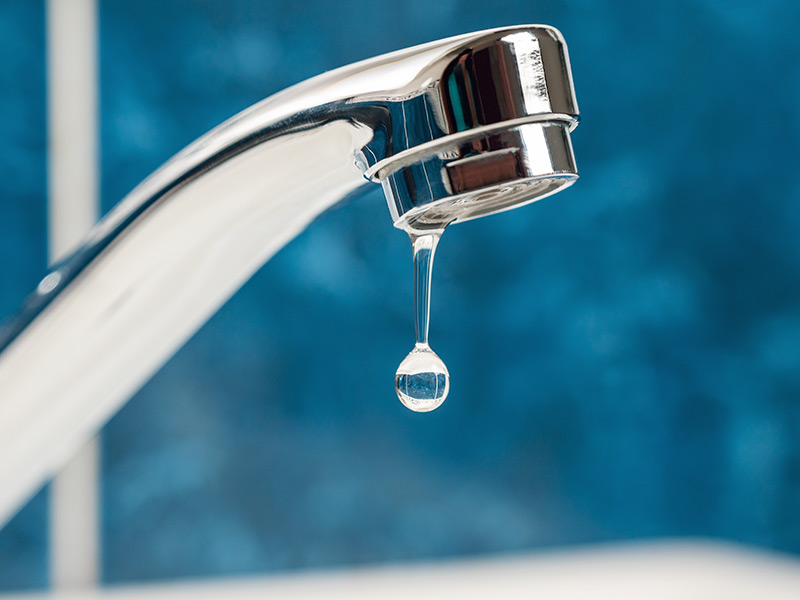
Allowing a slow, steady drip of cold water from a faucet can be enough to prevent pipes from freezing.
- Why It Works: Running water, even a trickle, keeps water molecules moving and helps relieve the dangerous pressure buildup inside the pipes.
- Which Faucets: Choose a faucet that is farthest from where the main water line enters your home. If you have sinks located on exterior walls, let those faucets drip as well.
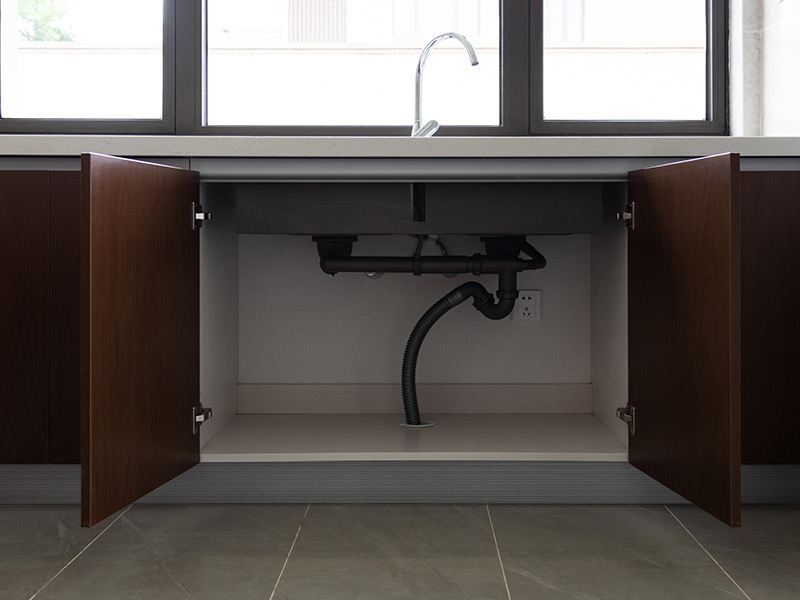
2. Open Cabinet Doors
Pipes under kitchen and bathroom sinks are often enclosed in cabinets against cold exterior walls.
- How It Helps: By opening the cabinet doors, you allow the warmer air from your home to circulate around the pipes, keeping their temperature above freezing.
3. Keep Garage Doors Closed
If your garage is attached to your home and contains water supply lines, keeping the garage doors closed is essential. This helps trap any available heat and shields the pipes from harsh winds and extreme cold.
4. Monitor Your Thermostat
During extreme cold, resist the urge to lower your thermostat at night. Keeping the temperature consistent provides a stable defense for your entire plumbing system. A setting of 65°F or higher is recommended during severe cold snaps.
What to Do If You Suspect Frozen Pipes
Even with the best preparation, pipes can sometimes freeze. Acting quickly and correctly is crucial to prevent a burst.
How to Identify a Frozen Pipe
The first sign of a frozen pipe is usually reduced water flow from a faucet. If you turn on a tap and only a trickle comes out—or nothing at all—you likely have a frozen pipe. Other warning signs include:
- Visible frost on the outside of the pipe.
- Strange gurgling or banging sounds coming from your plumbing.
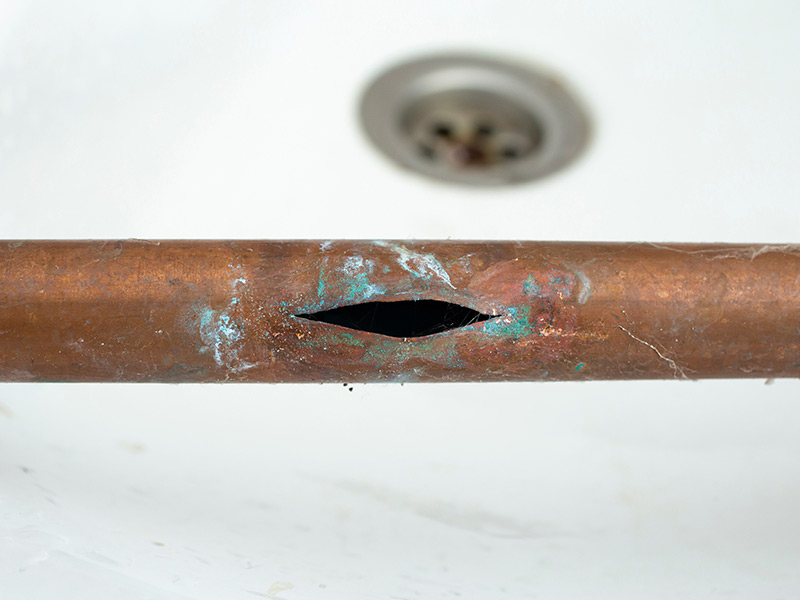
- Bulges or cracks appearing on the pipe.
How to Thaw a Frozen Pipe Safely (4 Easy Steps)
If you locate the frozen section, you can attempt to thaw it yourself. Please remember: Safety is our top priority.
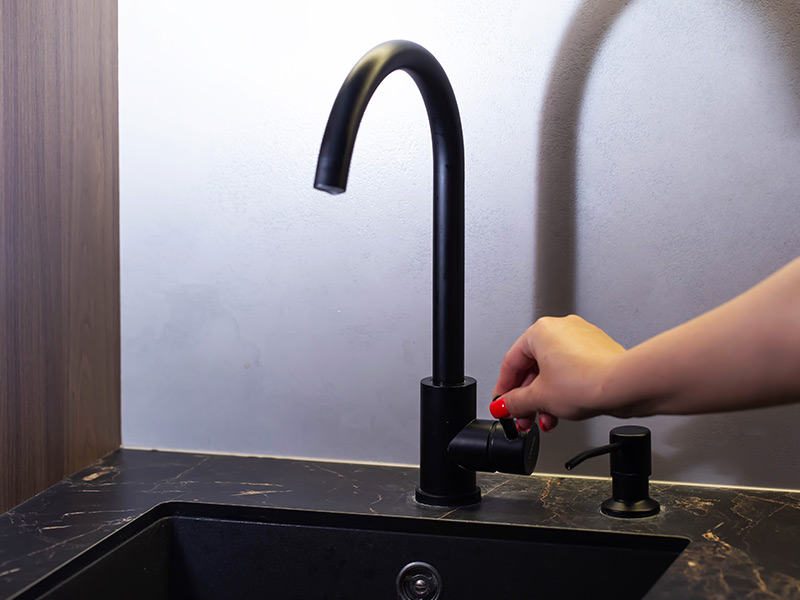
- Keep the Faucet Open: Leave the faucet connected to the frozen pipe open. As the ice melts, the running water will help speed up the thawing process, and an open faucet allows pressure to escape.
- Apply Gentle Heat: Thawing a pipe too quickly can cause it to break. Use gentle heat sources like:
- A hair dryer: Direct the warm air onto the pipe, starting from the faucet end and working your way toward the blockage.
- An electric heating pad: Wrap the pad around the frozen section.
- Towels soaked in hot water: Wrap the pipe with hot towels. Place a bucket underneath to catch any runoff.
- NEVER Use an Open Flame: Do not use a blowtorch, propane heater, or any other open-flame device. These create a serious fire hazard and can damage your pipes. Also, ensure any electrical devices do not come into contact with water.
What to Do If a Pipe Bursts
If a pipe does burst, your immediate goal is to stop the flow of water to minimize damage.
- Shut Off the Main Water Supply: Every homeowner and property manager should know where the main water shut-off valve is located and how to operate it. Turn it off immediately. Here’s a helpful video for you.
- Call for Help: A burst pipe is an emergency. First, call a licensed plumber to repair the pipe.
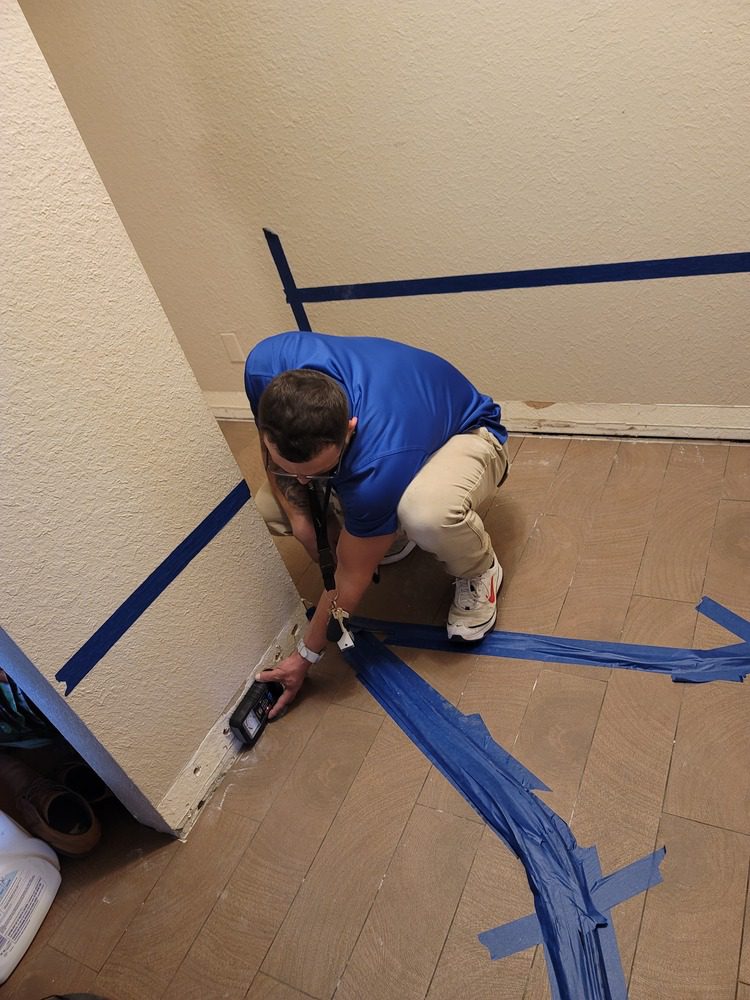
- Contact a Restoration Company: Once the pipe is fixed, you will need to address the water damage. Call a certified restoration company like 24-7 Restoration. Our teams are available 24/7 to begin the water extraction and drying process, preventing further damage and mold growth.
Long-Term Solutions for Added Protection
For properties that are frequently at risk, these permanent solutions offer the highest level of protection.
- Install Heat Tape or Heat Cables: These products are specifically designed to wrap around pipes and use a small electric current to keep them warm. Choose a UL-listed product with a built-in thermostat for safety and efficiency.
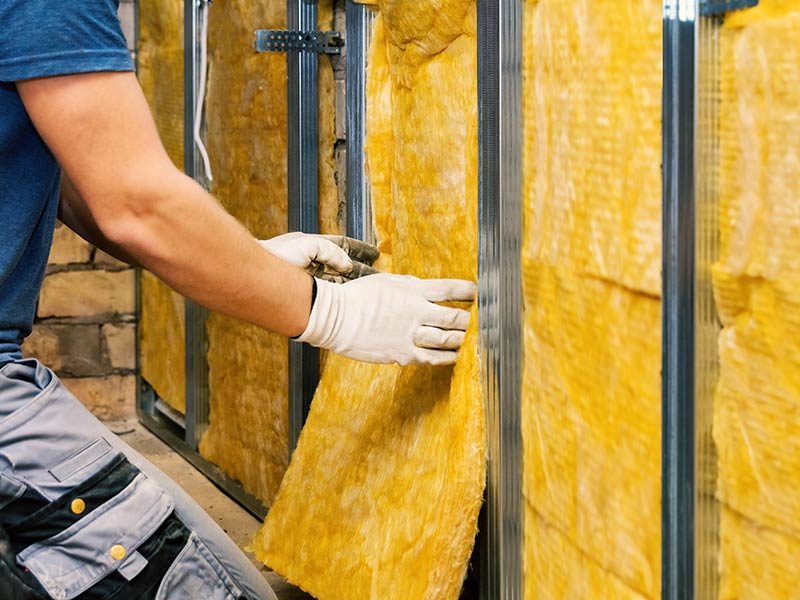
- Improve Home Insulation: Adding insulation to attics, basements, and crawl spaces helps maintain a warmer ambient temperature around your pipes.
- Relocate Pipes: During a remodel, consider rerouting pipes away from unheated areas or exterior walls.
- Install a Whole-House Leak Detection System: These smart systems can monitor water flow and automatically shut off the main water supply if a leak is detected, providing invaluable protection, especially when you are away.
Your Partners in Prevention and Recovery
Protecting your home from frozen and burst pipes requires a proactive approach. By insulating pipes, sealing air leaks, and taking immediate action during cold weather, you can safeguard your property against significant water damage.
For preventive inspections or long-term solutions, contact a licensed local plumber.
If the worst happens and you experience a burst pipe, remember to act fast. After shutting off your water and calling a plumber, contact the restoration experts at 24-7 Restoration. We are a family-owned business serving Boulder County and the Front Range, and we are ready to respond to your emergency 24/7. Our certified team will handle everything from water cleanup to full reconstruction, restoring your property and your peace of mind.